
Taiwan’s Coast Guard has identified a fishing vessel it suspects of operating as part of China’s maritime militia, saying the boat traveled alongside a Chinese coast guard ship and a research vessel. The disclosure, reported by Reuters on October 23, 2026, raises a question extending beyond the Taiwan Strait: is maritime pressure moving further into the Pacific approaches east of the island?
It is not a declaration of war, nor definitive proof that the three vessels were carrying out a military mission. That characterization comes from Taiwanese authorities. The actual encounter took place in August; what is new on October 23 is the vessel’s public identification and the coast guard’s assessment.
What happened on August 16?
Taiwan’s Coast Guard identified the fishing boat as Minfudingyu 07902. It said the vessel appeared off Taiwan’s eastern coast on August 16, 2026, operating near a Chinese coast guard vessel and a research ship. According to the agency, the fishing boat came approximately 2.7 nautical miles outside Taiwan’s restricted waters, prompting Taiwan to dispatch a patrol craft to move it away.
The wording matters. This does not establish that the vessel was 2.7 nautical miles from Taiwan’s shoreline or that it entered restricted waters. The reported distance was measured outside the boundary of those waters. The position alone also cannot show who directed the vessel or what orders its crew had received.
Reuters reported that surveillance company Apex Aviation documented the group using radar imagery, infrared photographs and Automatic Identification System data. Taiwan’s Coast Guard said it had placed the Minfudingyu 07902 on a priority monitoring list because of characteristics it associates with maritime militia activity.
Why does the phrase “gray-zone operation” matter?
Gray-zone activity generally refers to coercion or pressure designed to stay below the threshold of overt armed conflict. It may involve coast guards, fishing fleets, research missions or civilian vessels. Determining whether a specific activity fits that description requires evidence about its organization and purpose, not simply an unusual course or an unfamiliar flag.
Taiwan’s coast guard argues that the coordination of fishing, research and law-enforcement ships points to an expanding Chinese operational pattern in the western Pacific. Officials say these activities also add to the surveillance burden facing Japan and the Philippines, particularly where competing maritime interests meet.
For Taiwan, the eastern coastline matters because it provides access to vital shipping and supply routes. Monitoring activity there is therefore distinct from the better-known encounters in the Taiwan Strait. Some Taiwanese officials view such deployments as preparation for the possibility of a future maritime blockade. That concern is not the same as proof that a blockade is under way.
What has Beijing said?
China claims Taiwan as part of its territory and has repeatedly maintained that its activities in waters it considers Chinese are lawful. Taiwan disputes that position. As Reuters reported on October 23, China’s defense ministry had not immediately replied to the agency’s request for comment on these specific allegations.
A lack of immediate comment cannot be interpreted as agreement with Taipei’s account. It also leaves important questions unresolved: the legal status of the precise waters involved, the fishing boat’s actual organizational ties, and whether evidence independent of official assertions can establish its intended mission.
The documented news, then, is narrower and more substantial than a vague warning about ships: Taiwan disclosed a named vessel, the date of an encounter, a distance from its restricted waters and a patrol response, while Reuters described surveillance evidence showing the vessels’ movements. The argument that those movements amounted to “battlefield preparation” remains an attributed Taiwanese assessment, not an uncontested finding.
Further maritime records and official responses may clarify the event. Until then, readers should distinguish the verified sequence reported by the coast guard from broader predictions about how a future confrontation could unfold.
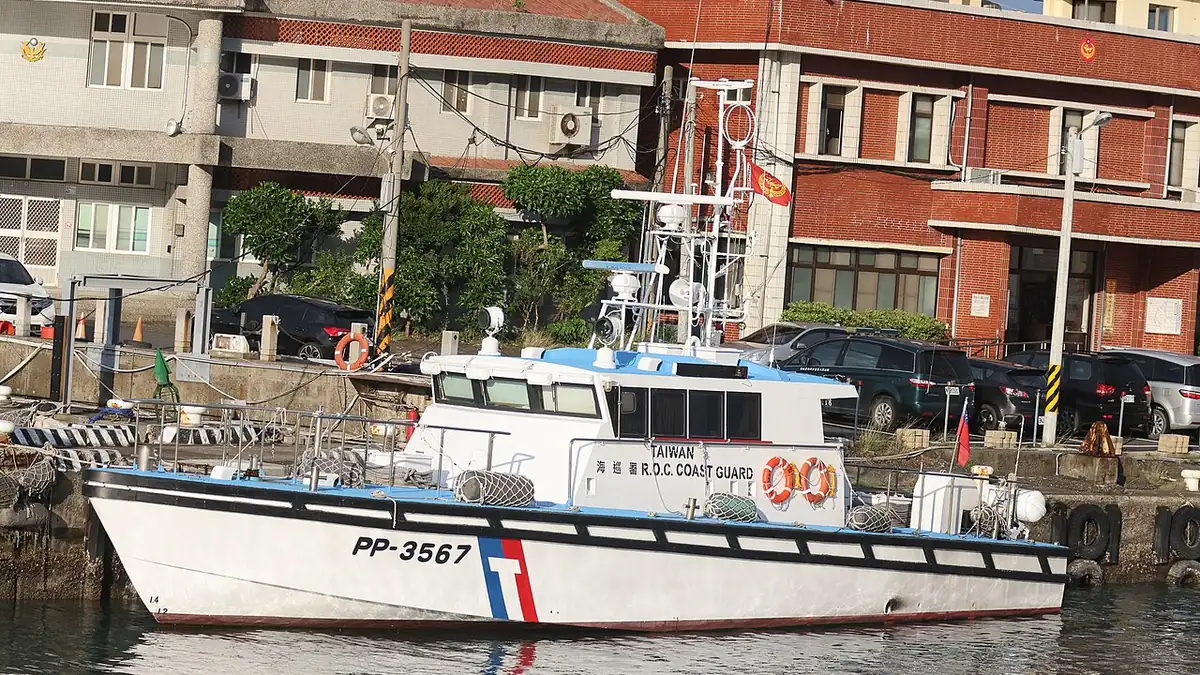
Suggested lead image: Taiwan Coast Guard patrol vessel photographed in 2024. Archive image; it does not show Minfudingyu 07902 or the August 16 encounter.
Sources: Reuters, October 23, 2026; Reuters report reproduced with source details.