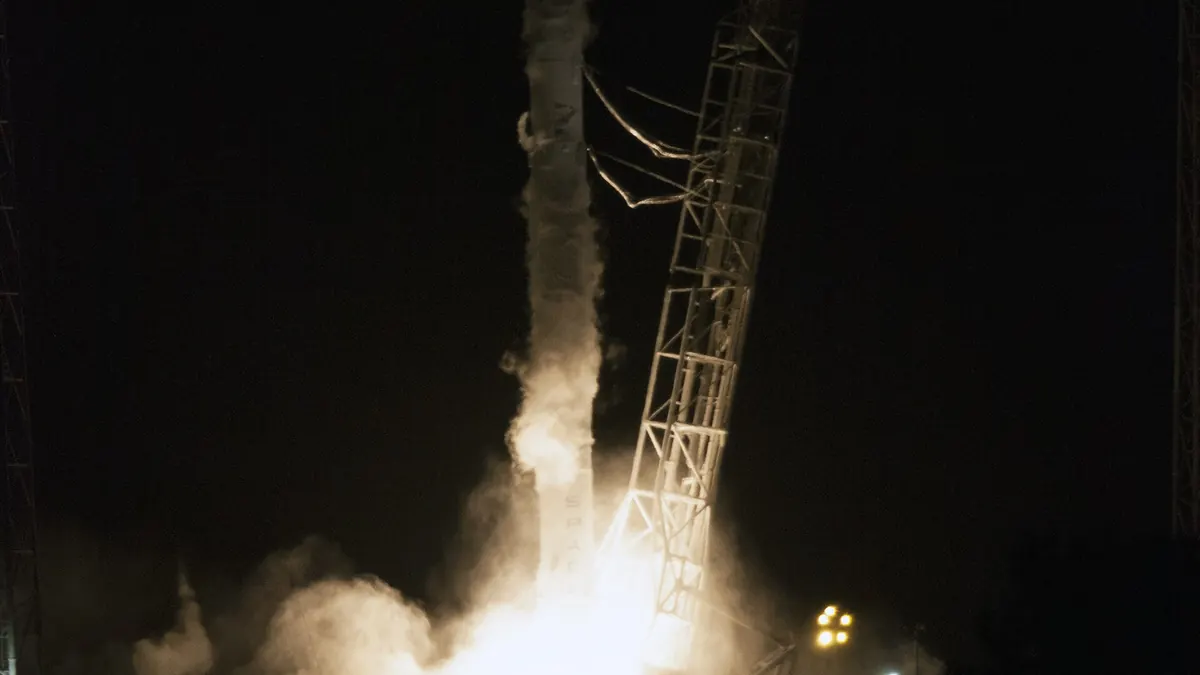

SpaceX is most often associated with rockets, Starship and its Starlink satellite network. Its third-quarter results, released on October 20, 2026, revealed a broader business story: artificial-intelligence infrastructure is now a major driver of the company’s revenue surge. That raises a timely question about Elon Musk’s company: what business is SpaceX becoming?
Source: SpaceX: Q3 2026 results filed with the SEC.
The figures behind the headlines
The SEC-filed results showed quarterly revenue of $14.58 billion, up 161% from a year earlier. Net income reached a reported $4.4 billion, reversing a $1.1 billion loss in the comparable period a year earlier. These are reported quarterly figures, not a guarantee of future performance.
The standout number came from AI infrastructure. Revenue from that operation reached approximately $7.6 billion, more than nine times the year-earlier level, according to the results. A key source of that growth is providing data-center computing capacity to companies developing and operating demanding AI systems.
Source: SpaceX: Q3 2026 results filed with the SEC.
Why spectacular growth is not the whole financial story
Building powerful data centers requires enormous upfront investment. SpaceX’s quarterly capital expenditure was reportedly around $19.6 billion, much of it directed to AI facilities. That means readers need to look beyond sales growth and ask how quickly investments might pay off, how operations are financed and whether the business can sustain demand.
The results do not mean SpaceX has abandoned spaceflight. It continues to operate launch services and Starlink, whose subscriber base exceeded the estimates cited in the coverage. Average revenue per Starlink user nevertheless declined as the service expanded internationally. Different businesses are growing at different speeds and carry different costs.
Source: SpaceX: Q3 2026 results filed with the SEC.
The next questions for SpaceX
Attention now turns to utilization of new computing facilities, the pace of capital spending and the resilience of the launch and satellite businesses. Speculation about possible corporate combinations should remain clearly labeled as speculation unless the companies make a confirmed announcement.
The bigger significance is that two industries once discussed separately—space systems and industrial-scale computing—are increasingly intertwined. The quarterly figures provide a snapshot of that transformation; they do not by themselves tell investors or consumers how sustainable it will be.
Source: SpaceX: Q3 2026 results filed with the SEC.