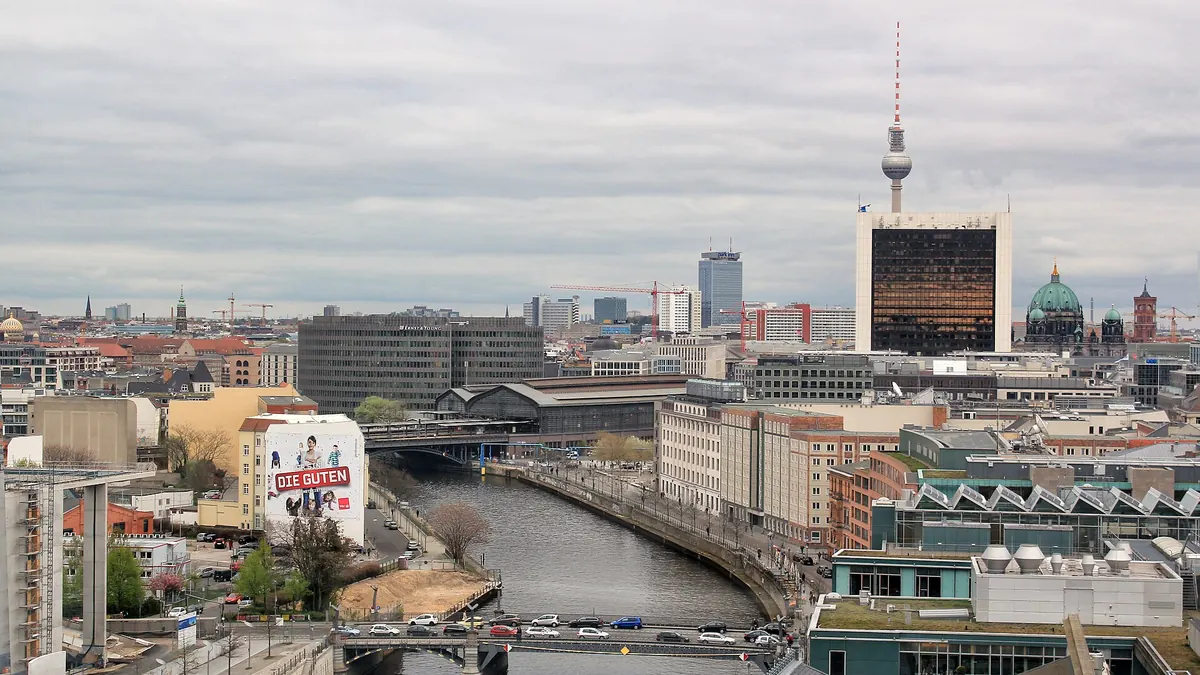

Germany wants to be seen as more than a traditional industrial powerhouse. At the Invest in Germany summit in Berlin on October 20, Chancellor Friedrich Merz sought investment in artificial intelligence, semiconductors, defense and infrastructure. The headline numbers were enormous, but the real test is whether the promises become new facilities, productive capacity and jobs.
Source: Invest in Germany-Summit in Berlin | Bundesregierung.
What happened at the summit
The German government brought business leaders and investors together to promote opportunities across the economy. The government reported around €230 billion in investment commitments associated with the gathering. Major names included Amazon and Nvidia, alongside companies in energy, technology and industrial infrastructure.
The government’s own announcement described a meeting intended to bring about 200 senior representatives into contact. But commitments vary. Some cover multiple years, may be conditional or relate to projects at very different stages. Adding every pledge as if it were money spent on October 20 would overstate the immediate economic impact.
Source: Invest in Germany-Summit in Berlin | Bundesregierung.
Why chips and AI matter so much
Semiconductors and data centers provide the computing capacity needed to train and run sophisticated AI systems. Additional European facilities could support local developers, expand industrial capability and reduce dependence in selected parts of the technology supply chain.
Merz also emphasized less bureaucracy, faster permits and infrastructure improvements. The official statement outlined Germany’s ambition to sharply increase its AI computing capacity by 2030. That is a target and policy direction, not a description of facilities already running today.
Source: Invest in Germany-Summit in Berlin | Bundesregierung.
What would count as a real result?
Individual contracts, final investment decisions, construction starts and actual employment will reveal how much of the plan materializes. Some commitments may have been under discussion before the summit; others are spread across years. It is therefore essential to distinguish a political and business announcement from completed investment.
Germany is trying to modernize its industrial base in an environment of intense competition, costly energy and rapid technological change. The push for AI, chips and advanced manufacturing is one response, but execution matters at least as much as the headline value.
The questions for the years ahead are concrete: do projects break ground, does installed computing capacity rise, and do smaller firms and workers benefit? Those are better measures of success than the amount announced at a single conference.
Source: Invest in Germany-Summit in Berlin | Bundesregierung.
Sources and verification date
- Invest in Germany-Summit in Berlin | Bundesregierung — 2026-10-20.
- AFP: investment pledges reported by Merz — 2026-10-20.