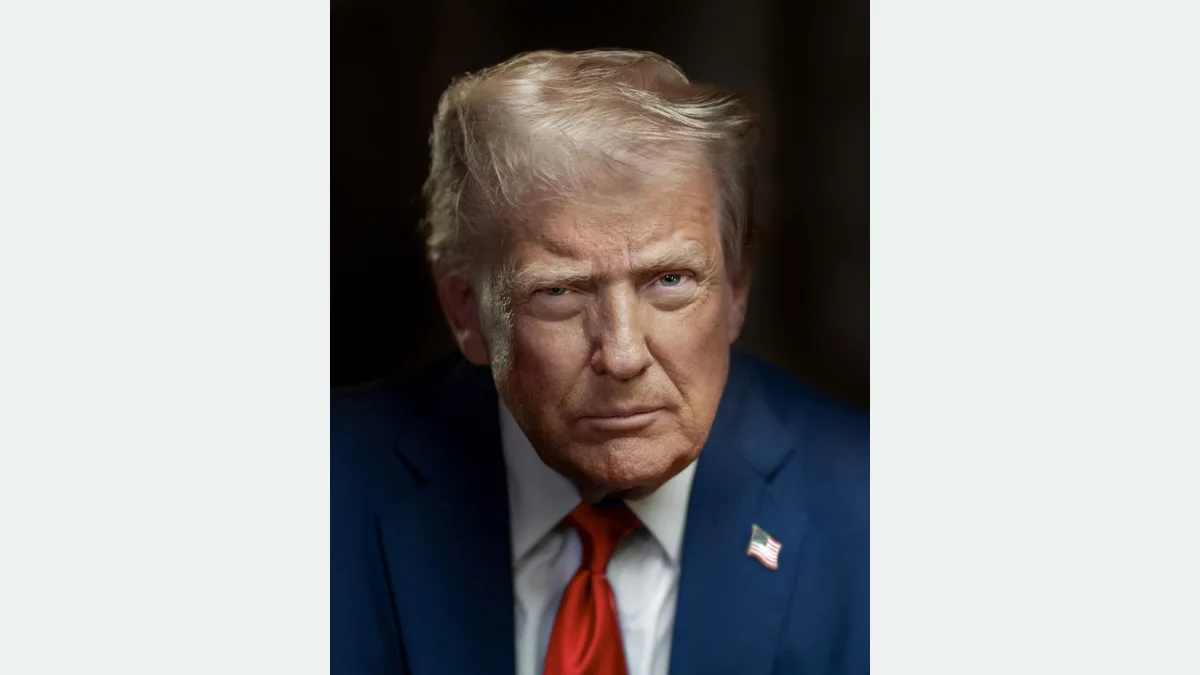

A potential meeting between the presidents of the United States, Russia and China has put one tantalizing image into the news cycle: Donald Trump, Vladimir Putin and Xi Jinping at the same table. On October 19, 2026, the Kremlin acknowledged that the possibility of a three-way encounter had come up in discussions. But there is a crucial caveat behind the headline: no trilateral summit has been agreed, and no agenda has been confirmed. So what exactly has happened, and why does it matter?
A possibility, not a scheduled summit
Kremlin spokesperson Dmitry Peskov addressed reports of a potential meeting on the sidelines of next month’s Asia-Pacific Economic Cooperation (APEC) gathering in China. According to the reports consulted, he said the subject of such a meeting had indeed been raised. He also stressed that there had been no specific proposals or agreements about the event itself or what it would cover.
That distinction changes the meaning of the story. Diplomatic officials often discuss possible formats long before leaders agree to participate. A conversation about a meeting is not proof that invitations have been accepted, security arrangements completed or a joint statement prepared.
Trump separately indicated that he was open to joining a three-way discussion with Putin and Xi, according to the reports consulted. A willingness to consider the idea is relevant; it is not a substitute for an announcement from all the governments involved.
There is also a basic practical question. An APEC gathering is a multilateral event with its own program. A separate three-leader meeting would require coordination over timing, location, participants and topics. None of those logistical details establishes that an encounter is inevitable.
Would the war in Ukraine be discussed?
One report linked the idea to diplomatic attempts to address Russia’s war in Ukraine. Given Putin’s role in the conflict and Washington’s involvement in mediation, the subject is an obvious focus of interest. But it would go too far to describe this as a negotiated peace initiative or a summit formally dedicated to ending the war.
Ukraine has its own position. Foreign Minister Andrii Sybiha criticized the prospect of a U.S.-Russia-China meeting that might sideline Kyiv, the coverage reported. His argument was that talks about the war need the involvement of Ukraine itself. That is a clearly attributed Ukrainian assessment, not a proven prediction about how a hypothetical summit would turn out.
Peskov likewise said Ukraine would need to be involved in any final settlement. Agreement on the importance of participation, however, does not mean the parties have settled their profound differences on territorial control, security guarantees or the conditions for ending hostilities.
For readers, this is the question to watch: would a meeting merely place powerful leaders together, or would it establish a process that includes the country at the center of the conflict? At the moment, there is no documented answer.
Nuclear arms: a different, equally consequential agenda
Another thread of reporting concerns nuclear arms and strategic security. Trump has expressed interest in talks with Russia and China about reducing nuclear dangers. Such diplomacy would be complex because the three countries do not have equal-sized arsenals or identical approaches to arms control.
Washington and Moscow retain much larger nuclear stockpiles than Beijing. China has resisted approaches that treat its responsibilities as equivalent to those of the two larger nuclear powers. Before any agreement could be reached, negotiators would have to define what weapons or deployments would be covered, the obligations of each state and a mechanism for verification.
An expression of interest in denuclearization should not be mistaken for a treaty, a numerical reduction commitment or an agreed timetable. None has been announced as an outcome of this possible meeting.
Why the rest of the world is watching
Decisions made by Washington, Moscow and Beijing have implications far beyond their borders. Their relationships can affect energy markets, international trade, technology policy and security arrangements. That explains why speculation about a meeting can attract attention even in countries far removed from the conflict in Europe.
Still, diplomacy is measured by what participants agree and subsequently do, not simply by how historic a group photograph might look. A meeting could lead to substantive discussions, an inconclusive statement or nothing at all. None of those outcomes is guaranteed.
As of this edition, the Kremlin has acknowledged the idea, Trump has shown openness, and a formal three-way summit remains unconfirmed. The next meaningful development will be an official schedule, an accepted invitation or a jointly described agenda. Until then, the story is about an intriguing diplomatic proposal—not a breakthrough that has already happened.
Sources: Benzinga on the Kremlin’s comments · SBS on Trump’s response · Axios on nuclear-security context.
Sources reviewed on October 20, 2026, Ecuador time. Developing events may change.