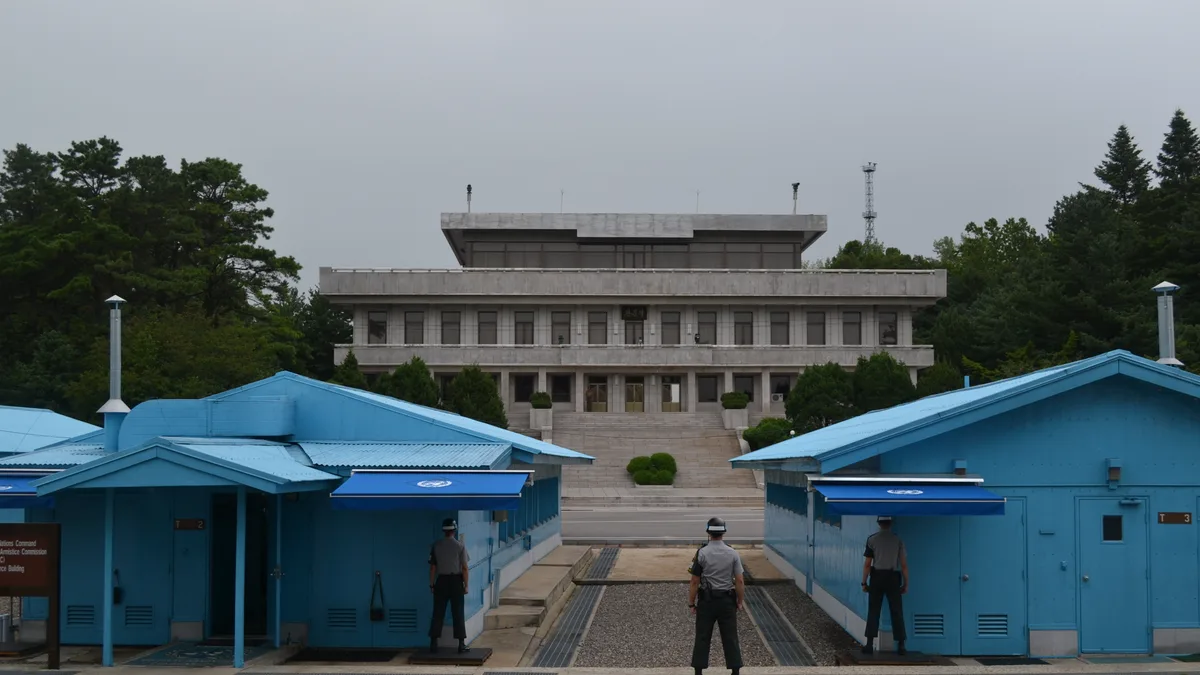

Warning shots, the prospect of propaganda loudspeakers and threats involving additional tactical weapons have brought fresh attention to one of the world’s most heavily guarded borders. On October 19, 2026, North Korea warned that it could restart broadcasts toward South Korea and strengthen its military posture near the dividing line. Seoul answered on October 20 that it would respond firmly to further provocations. The most important detail is also the easiest to miss: the two governments disagree over what happened along the border and why.
What North Korea actually threatened
The statement came from Kim Yo Jong, a prominent North Korean official and sister of leader Kim Jong Un. In remarks carried by North Korean state news agency KCNA and reported by Yonhap, she accused South Korean troops of endangering Northern personnel through warning shots while North Korea was reinforcing barriers near the frontier.
She raised the prospect of restoring loudspeaker broadcasts aimed at the South and positioning additional tactical strike weapons near the border. Those are serious statements, but they are threatened measures, not independently verified completed deployments. Reporting them as already in place would misrepresent the available evidence.
The dispute unfolds against a longer pattern. North Korea has been constructing barriers and placing mines near the dividing line since 2024. South Korea says it has fired warnings when Northern workers or military personnel have crossed the Military Demarcation Line. Pyongyang presents those shots as dangerous provocations during its construction activities.
Seoul’s response came a day later
On Tuesday, October 20, South Korea’s Defense Ministry rejected the North’s accusations and described its warnings as legitimate defensive actions intended to prevent border crossings. The ministry expressed concern about Pyongyang’s proposals involving new weapons and renewed broadcasts.
It also warned of a firm response if North Korea carried out further actions that Seoul considered provocative. This is a documented exchange of official statements, not evidence that a new armed conflict has begun.
South Korean military officials separately stressed readiness along the frontier. Seoul accused North Korea of placing mines on its side of the demarcation line and linked them to injuries suffered by its personnel. The North’s narrative of the incidents differs. With rival military authorities making competing claims, responsible reporting needs to identify the source of each assertion rather than present the more dramatic version as established fact.
Why loudspeakers can become a major flashpoint
At first glance, propaganda broadcasts might seem trivial compared with tanks or missiles. On the Korean Peninsula, however, loudspeakers have a long history as instruments of psychological pressure. Messages, music and political statements projected across the border signal hostility and can trigger responses from the other side.
Suspending such broadcasts has sometimes been a small but visible gesture toward reduced tensions. Restoring them would therefore have symbolic consequences beyond the immediate noise. It might also undermine attempts by South Korea’s leadership to reopen a diplomatic channel with Pyongyang.
The possible addition of tactical strike weapons carries even higher stakes. Troops on both sides operate within a security environment in which warning procedures, patrols and border engineering work can bring armed personnel uncomfortably close together.
The risk is not limited to planned military action
The two Koreas agreed to an armistice in 1953, but never concluded a comprehensive peace treaty. Their frontier includes the Demilitarized Zone, or DMZ, an area governed by detailed military rules and surrounded by significant forces.
Security specialists cited by Yonhap described a danger of misunderstanding: warning fire intended as a signal could be interpreted by the other side as an actual attack. A second unit might respond to that perceived attack. In such circumstances, escalation does not necessarily begin with one government deciding to launch a major operation.
That makes accuracy especially important for a global audience. The latest threats do not mean a new Korean War has been declared, nor does a warning about weapons prove they have been installed. They show that communication and military behavior at the frontier have become more confrontational.
What would count as a real escalation?
The next developments to check are whether either government confirms that loudspeakers have been reactivated, whether credible reporting verifies new weapons near the boundary, whether further border incidents occur and whether officials reopen direct communications.
For now, the confirmed sequence is straightforward: Kim Yo Jong issued threats on October 19, and South Korea responded on October 20. What remains uncertain is whether those proposed measures will be carried out. Understanding that distinction helps readers follow a serious international story without mistaking rhetoric for an event that has not yet occurred.
Sources: Yonhap vía The Independent: desfile de Victoria’s Secret · Yonhap: South Korean military response · EFE / ABC: border tensions.
Sources reviewed on October 20, 2026, Ecuador time. Developing events may change.