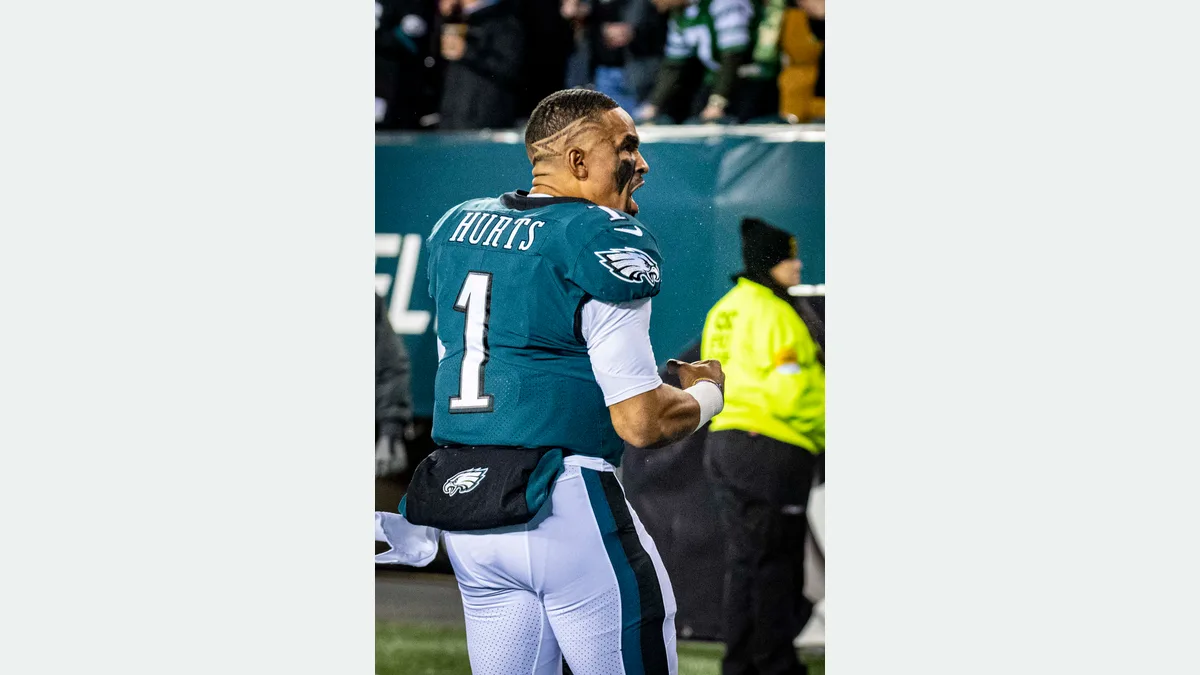

The biggest Philadelphia Eagles story of October 19, 2026, was not about a score. The team and quarterback Jalen Hurts’ agent announced that doctors diagnosed him with deep vein thrombosis and bilateral pulmonary emboli. They also emphasized an encouraging point: Hurts is clinically stable, and his medical team expects a full recovery. The football implications are considerable, however. He cannot participate in contact activities while receiving anticoagulant treatment.
How a calf concern turned into a more serious diagnosis
The public timeline began with an issue in Hurts’ calf. In an earlier team statement, Philadelphia said the quarterback had sought treatment after being stepped on during a game against the Los Angeles Rams. While the team was in London, an ultrasound identified a superficial blood clot. Physicians reviewed the results and determined at that time that he could play, while recommending follow-up monitoring.
Subsequent tests revealed a different medical picture. On Monday, the Eagles and agent Nicole Lynn announced the diagnosis of deep vein thrombosis and blood clots in both lungs. That development explains why the discussion moved beyond missing a single game to a potentially extended absence.
The team’s statement said Hurts had no significant functional limitations and would be treated with blood-thinning medication. It expressed the expectation that he could eventually return to contact football once he was off anticoagulants. It did not, however, identify an official date on which he would be cleared to play.
What do these medical terms mean?
Deep vein thrombosis, commonly shortened to DVT, refers to a blood clot forming in a deep vein, often in the leg. A pulmonary embolism occurs when material circulating in the bloodstream blocks blood flow through an artery in the lungs. The condition can be serious and requires professional medical management.
Anticoagulants help prevent harmful clots from growing or additional clots from forming. They also create a potential bleeding risk after physical trauma. That matters enormously in a collision sport such as American football. Someone can feel relatively well and still be medically advised to avoid contact activities during treatment.
It would be irresponsible to infer the precise cause of Hurts’ condition from news reports alone. Long-distance travel, injuries and other factors are sometimes discussed in the broader medical literature, but his team’s statements do not establish which, if any, caused his diagnosis. His publicly disclosed condition also should not be treated as a template for another person’s care.
Is his 2026 season over?
NFL Network and other outlets reported Monday that Hurts was expected to miss the remainder of the season. Those reports address the likely football calendar. The Eagles’ official medical update sets out a different, more concrete requirement: no contact football while on anticoagulants, with a possible return after treatment ends.
This distinction matters. A projection that his season is over is not the same as a medically announced recovery date. There is no reason to treat speculative timetables or unsourced social-media updates as more authoritative than the club and its medical representatives.
Hurts has been a defining player for Philadelphia, including his performance as Super Bowl LIX MVP. Replacing him presents difficult tactical choices for head coach Nick Sirianni. Tanner McKee has already stepped into the quarterback role, and the Eagles must adapt their offense while giving Hurts time and space to recover.
Why this story reaches beyond the NFL
The announcement also draws attention to a condition many fans may not have expected to hear about in connection with an elite athlete. Fitness and professional training do not make a person immune to every medical problem. But this specific case is best understood through the verified information actually released, without projecting one patient’s experience onto millions of other people.
The next significant update will come when the team can say more about Hurts’ treatment, training eligibility and medical clearance. As of this report, the Eagles and his representative said the prognosis was very good and did not anticipate long-term effects. For now, the meaningful headline is that the team expects him to recover — not that anyone can promise a return date.
Sources: Eagles and Nicole Lynn, October 19 · Eagles, October 15 · NFL Network · Los Angeles Times.
Sources reviewed on October 20, 2026, Ecuador time. Developing events may change.