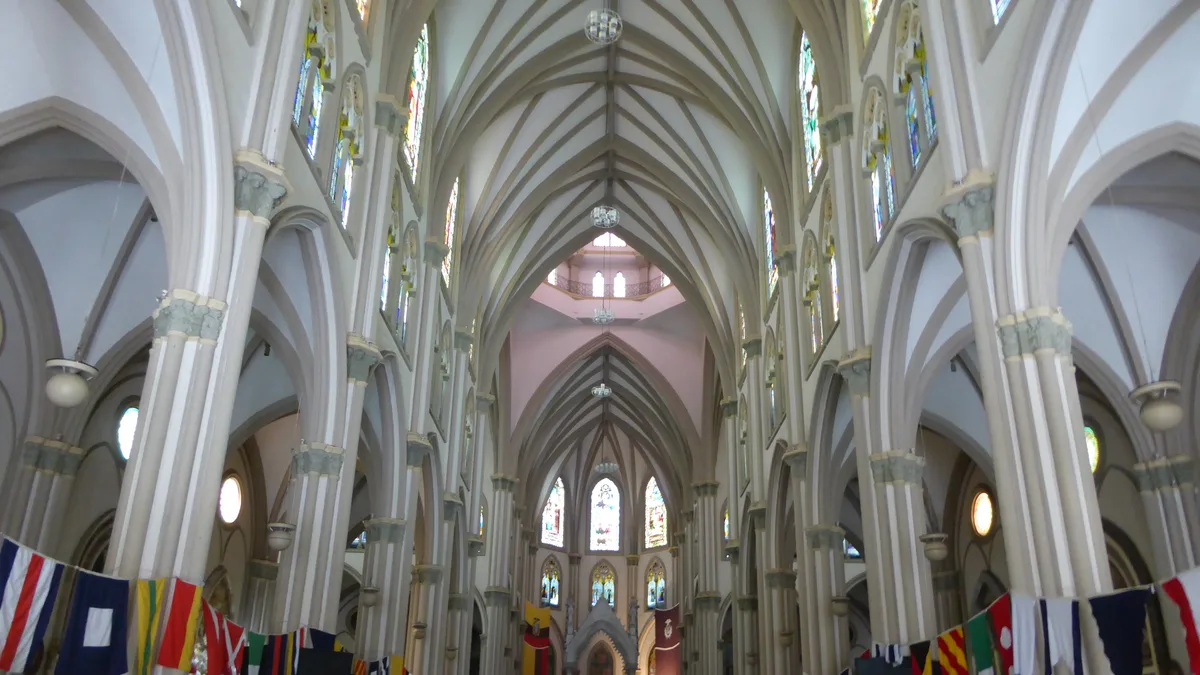

A livestreamed church service in the Ecuadorian city of Guayaquil ended in a fatal accident on Saturday, October 17, 2026. Father Patricio Sánchez Molinari died after a large cross behind the altar became detached and struck him as he celebrated Mass at the Church of Our Lady of Perpetual Help. By Monday, the focus had shifted from the widely circulated recording to a more consequential question: what caused the fixture to fall?
What investigators and local reporting have established
The accident took place inside the church in south-central Guayaquil. The service was being broadcast online, and Ecuadorian news organizations reported viewing footage of the cross coming loose. Congregants rushed to help the priest, but the injuries proved fatal.
Sánchez Molinari was 52. News of his death spread through local religious communities and beyond Ecuador, partly because the incident happened during a public ceremony and was recorded. The recording demonstrates that the accident occurred; it does not establish why a heavy object detached from its support.
The distinction is critical. A video may show the final seconds of a structural failure without revealing the fixture’s installation history, its condition before the incident or the inspections undertaken over time. Sharing the most disturbing portion of the footage is not necessary for readers to understand the news.
Why the technical report matters
On October 19, the Ecuadorian outlet Primicias reported that the Archdiocese of Guayaquil was awaiting a technical assessment of the cross and its mounting. The archdiocese described maintenance practices in its churches and said technical support was available for parish buildings. Those statements provide background, not a final determination about this particular installation.
Questions still requiring answers include how the cross was secured, whether its supports showed deterioration, when inspections had taken place and what physical mechanism led to the detachment. These are matters for specialists to establish, rather than conclusions a journalist can draw from a viral clip.
In a separate report, Ecuavisa described how legal responsibility could be assessed if investigators identify a breach of duty. That discussion is conditional. It does not prove negligence, establish that an offense occurred or identify anyone as responsible. Such distinctions are particularly important in a sensitive case involving a death.
A farewell in Cuenca, beyond the viral video
On Monday, October 19, the priest’s remains were taken to Cuenca, his hometown, where family members and members of his religious community gathered to say goodbye. Ecuadorian coverage recalled his missionary work and the communities he served.
That part of the story is easily overshadowed by the shocking nature of the accident. Sánchez Molinari was more than a figure in a few seconds of footage: friends and parishioners knew him through years of pastoral work. Responsible coverage can recognize the public-safety questions without reducing the victim to the circumstances of his death.
The case also raises a broader issue for buildings where people gather. Large suspended or wall-mounted objects, whether in churches, concert halls, theaters or other public venues, require suitable installation and inspection. Yet the existence of general safety standards is not evidence that a particular building failed to meet them. Only case-specific findings can answer that question.
What remains unknown
As of this report’s editorial cutoff, the reviewed sources did not establish a verified public technical finding explaining the cross’s failure. No individual or institution should be described as culpable on the basis of speculation. The story should be revised when the responsible authorities release confirmed findings and any associated decisions.
Two threads now deserve public attention: the farewell to a priest whose death has shaken his community, and the investigation into how a fatal accident could happen during an ordinary religious service. The second demands evidence; the first deserves dignity. Neither is served by inventing details or circulating unauthorized images of the incident.
Sources: Primicias, technical report · Ecuavisa, possible legal questions · Ecuavisa, farewell in Cuenca.
Sources reviewed on October 20, 2026, Ecuador time. Developing events may change.